The time to act is now: UNOC3 must deliver for the ocean
The third UN Ocean Conference (UNOC3) is fast approaching, aiming to raise ambition to conserve and sustainably use the ocean’s resources in support of the implementation of UN Sustainable Development Goal (SDG) 14.
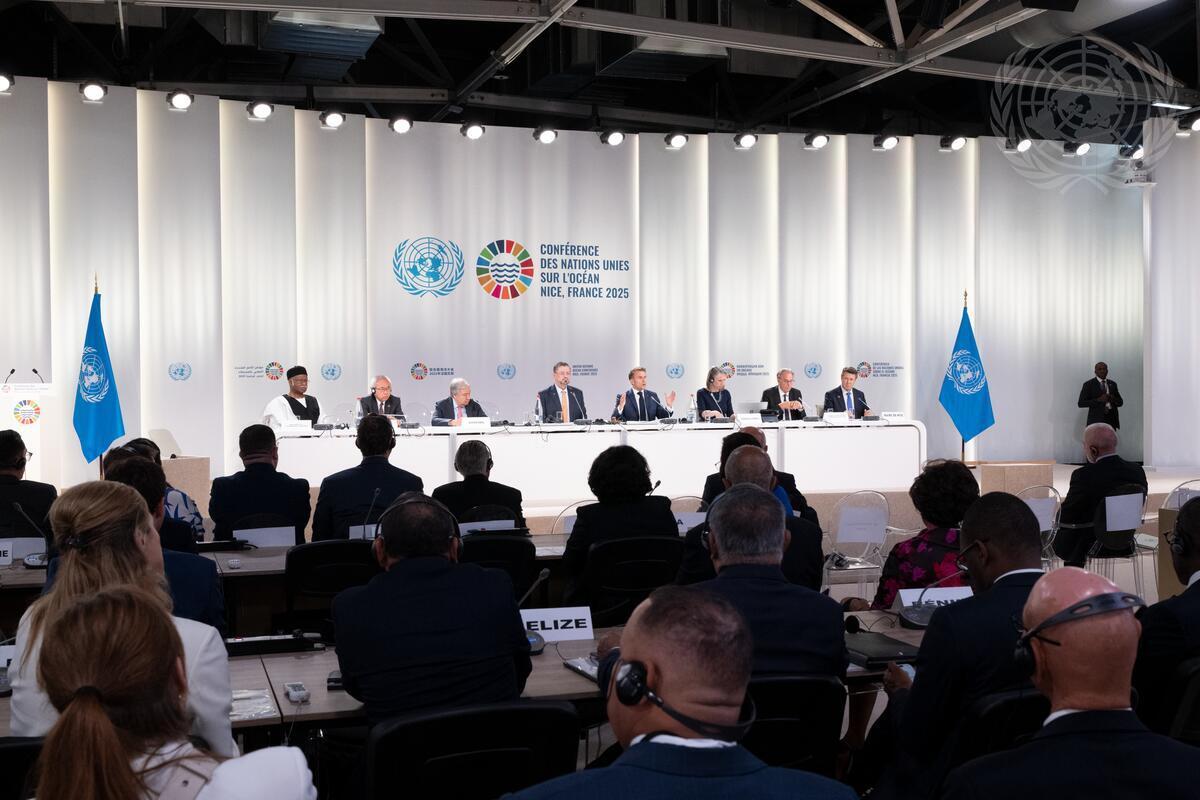
Building on the previous two UN Ocean Conferences, UNOC3 will bring governments, the private sector, non-governmental organizations (NGOs), and the scientific community together to coordinate, network, and announce further action for the ocean’s well-being. It will culminate in the “Nice Ocean Action Plan” – a political declaration and list of commitments. But the real question is: will it deliver, or will we continue to drift?
With the overarching theme “Accelerating action and mobilizing all actors to conserve and sustainably use the ocean”, the conference presents an unmissable opportunity to ride the tide to ocean protection. It must deliver a step-change in ocean action, critically so in the finance sector, on behalf of the billions of people who rely on surrounding seas for food security and livelihoods.
Currently, the ocean’s health is in alarming decline, and we are continuing to pile on the abuse. Nearly 38% of global fish stocks are overexploited and yet we continue to provide industrial fishing fleets with subsidies (WTO). Up to 199 million tonnes of plastic is already in the ocean (UNEP) and we are adding up to another 10 million tonnes every year (IOC/UNESCO). And while 8.3% of the world’s ocean is designated as marine protected areas (MPAs), a meagre 2.8% is assessed as likely to be effectively protected. Many so-called MPAs still allow destructive practices like bottom trawling, enabled by weak regulations and a lack of political will. This isn’t protection – it’s business as usual. We cannot keep pretending we’re safeguarding the ocean while over-exploiting it for the sake of short-term profits.
The ocean covers 71% of our planet’s surface. Our world is blue. To secure the future of humankind, we must understand that there is no healthy planet without a healthy ocean. We must take bold and immediate action to protect it, and UNOC3 is the next best chance for the world to do so.
30X30: WHAT TO EXPECT FROM THE 2025 UN OCEAN CONFERENCE
With UNOC3 co-hosts, France and Costa Rica, striving to produce an ambitious action plan, we must:
- Finish what we started and complete key ocean governance processes
From ratification of the High Seas (BBNJ) Treaty and finalizing the WTO’s Fisheries Subsidies Agreement to determined national leadership to conclude a robust plastics Treaty and the protection of at least 30% of the ocean by 2030, key multilateral processes and protection efforts hang in the balance. To finalize and implement these critical tools, UNOC3 must inject urgency and ambition, close unhelpful gaps, and drive global political will to do the right thing for the ocean’s well-being.
- Finance the future: mobilize capital for SDG14 and the sustainable blue economy
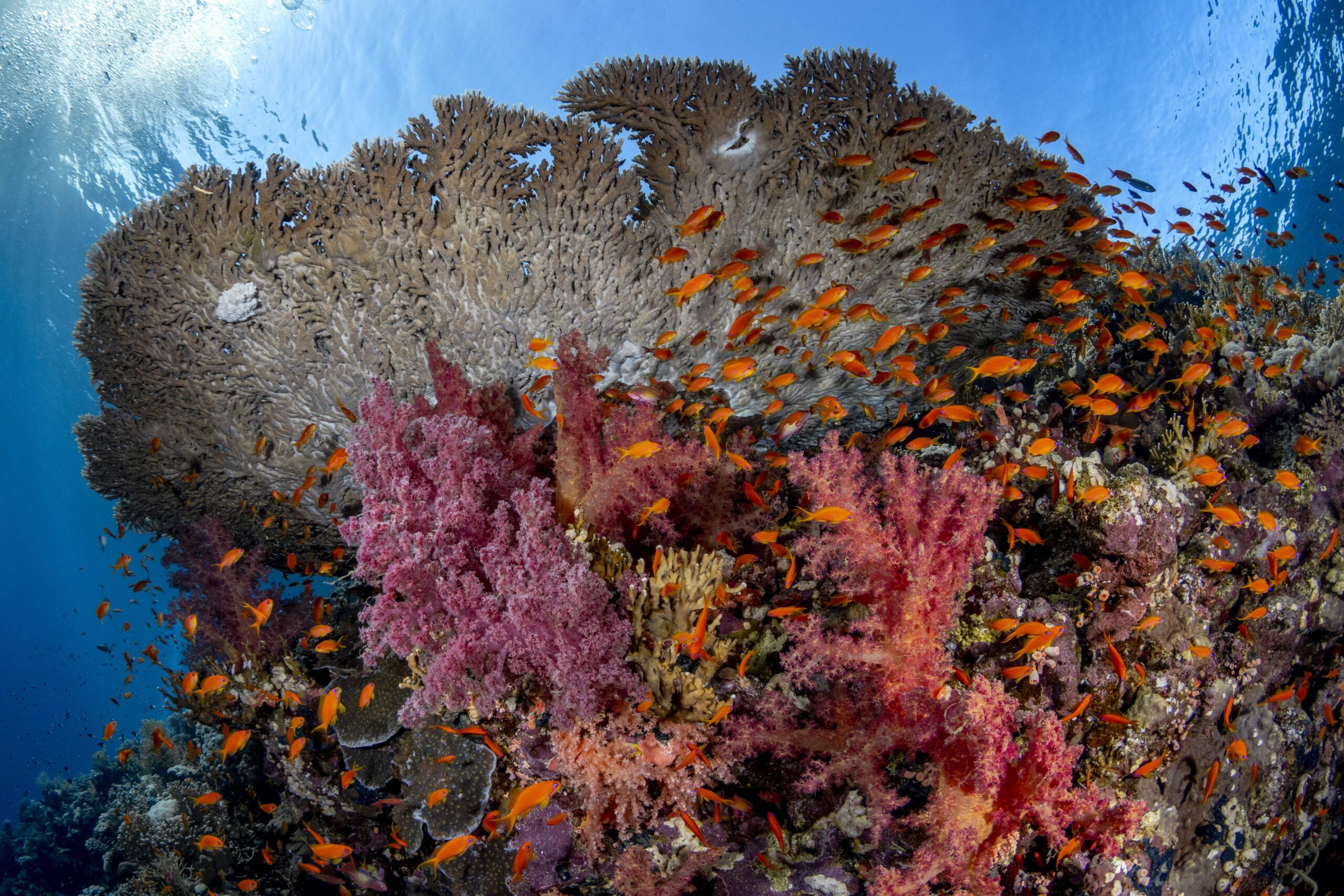
Despite the spotlight shone on the plight of coral reefs at last year’s UN biodiversity and climate change conferences, financial flows to protect coral remain a trickle. We cannot expect to maintain a healthy ocean without coral reefs, when 25% of fish species depend on them for their existence. UNOC3 must turn warm words into hard cash.
On the heels of the Blue Economy and Finance Forum (BEFF) being held in Monaco 7-8 June, UNOC3 must ensure policy-makers and leaders start exponentially directing finance to the sustainable blue economy. It’s time for finance ministers and investors alike to treat the ocean as what it truly is – not a victim, but a key solution to existential global challenges. Redirecting climate finance to ocean-based solutions will build resilience, food security, and clean energy for generations.
I emphasize that UNOC3’s Ocean Action Panel 3 “Mobilizing finance for ocean actions in the support of SDG14”, to be held on 10 June, will be key to boosting this priority. Taking place on the conference’s following day, Open Action Panel 6 “Advancing sustainable ocean-based economies, sustainable maritime transport and coastal community resilience leaving no one behind” will also take on a powerful role.
- Power decisions with knowledge: expand marine science and data access
Enhancing our scientific understanding of the ocean will be central to the success of UNOC3. The conference co-hosts recognized this by convening the One Ocean Science Congress in Nice during the week prior to the conference, with the consensual findings of the science congress to be conveyed to UNOC3.
UNOC3 Ocean Action Panel 2 “Increasing ocean-related scientific cooperation, knowledge, capacity building, marine technology and education to strengthen the science-policy interface for ocean health” is expected to further elevate this priority. As will Ocean Action Panel 7 “Leveraging ocean, climate and biodiversity interlinkages”.
Ocean knowledge must be democratized and translated into policy, with coastal communities, Indigenous Peoples, and local knowledge holders taking seats at the table. And what we learn from ocean science’s findings must be taught through ocean literacy permeating the schools and universities of the world.
THE OPPORTUNITY FOR 30X30 AT UNOC
The UN’s two most recent Biodiversity Conferences – COP15 and COP16 – have pushed the emergency buttons on ocean protection. The agreed goal of protecting at least 30% of the world’s land and ocean by 2030 (30×30), working in partnership with Indigenous Peoples and local communities, became one of the most recognized outcomes of COP15. At COP16, this momentum continued with a dedicated 30×30 Action Day inside the Blue Zone, signalling strong and growing political will.
With only 8.3% of the ocean currently designated as protected, UNOC3 must play a game-changing role in bringing the 30×30 goal into reality for the ocean. Without doubt, leaders will have a golden opportunity to accelerate progress at a pivotal time by announcing new marine protected areas at UNOC3, along with the financial means for maintaining them.
Crucially, we will not be successful in achieving 30×30 unless MPAs are established in the High Seas, and currently, less than 2% of international waters are under some form of protection. Fortunately, the BBNJ Treaty, commonly known as the High Seas Treaty, provides the world’s first legal framework to create MPAs in the high seas. With 60 ratifications required for the treaty to enter into force this year, it is critical that remaining countries move swiftly to ratify. Directly thereafter, working towards the 30×30 goal, the establishment of the first generation of high seas MPAs can then proceed.
MOBILIZING STAKEHOLDERS AT UNOC FOR ACTION ON 30X30
For UNOC3 to deliver on its aims and live up to its overarching theme, we must mobilize together to scale action. Everyone has a role. Governments must step up, not step back. Industry must invest in sustainability, not in over-exploitation. Civil society must keep the pressure on. And the advice of scientific consensus must be acted upon, not just cited.
UNOC3 is powerfully positioned to help chart our course to a sustainable future. It is no secret that the 2030 Sustainable Development Agenda is lagging. UNOC3 is one of our last best chances to get it back on track.
Since we cannot have a healthy planet without a healthy ocean, it’s in everyone’s interests to act together in support of 30×30. With only five years to go, the time to act is now. Delay is denial.
Header image credit: Shaun Wolfe / Ocean Image Bank
About the author
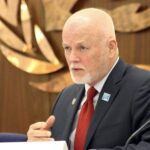
Ambassador Peter Thomson is the UNSG’s Special Envoy for the Ocean, in which role he leads global support for the implementation of UN Sustainable Development Goal 14, to conserve and sustainably use the Ocean’s resources. He served as President of the UN General Assembly, 2016-17. He was Fiji’s Permanent Representative to the UN, 2010-2016, during which time he led the Executive Board of UNDP, UNFPA and UNOPS and was elected as President of the International Seabed Authority’s Assembly and Council. He is the founding Co-Chair of the World Economic Forum’s Friends of Ocean Action and is a supporting member of the High-Level Panel for Sustainable Ocean Economy. In recognition of his work on ocean issues, the University of Edinburgh and the University of Bergen have bestowed Honorary Doctorates on Ambassador Thomson. He is an officer of the Order of Fiji.