Investing in Climate-Resilient Reefs as a Strategy for Coral Survival and Achieving 30×30
Coral reefs exist in over 100 countries and territories, forming the backbone of Earth’s vast and interconnected web of marine biodiversity. These ecosystems provide services valued at up to USD $9.9 trillion annually (Costanza et al., 2014), supporting the livelihoods, food security, and cultural heritage of close to one billion people, approximately 13% of the global population (Wong, Vrontos & Taylor, 2022). Coral reefs are especially vital to the climate adaptation strategies of the world’s most vulnerable island and coastal nations, yet they face escalating threats from both local pressures such as overfishing and pollution, and the mounting impacts of global climate change.
These pressures have reached a critical point. The world is currently experiencing the Fourth Global Coral Bleaching Event, the most widespread and severe bleaching event ever recorded. Rising ocean temperatures have triggered mass coral stress and mortality across tropical seas, underlining the urgent need for bold, science-based solutions.
A CRISIS IN MOTION
Despite decades of conservation efforts and international commitments, coral reefs continue to decline. Between 2009 and 2018, the Global Coral Reef Monitoring Network (GCRMN), an operational network of the International Coral Reef Initiative (ICRI), reported a 14% loss in live coral cover globally (Souter et al., 2021). More recent data suggests continued degradation and a shift toward simplified, less complex reef structures (Wicquart et al., 2025). These changes erode not just biodiversity but the ecosystem services that coral reefs provide, including food security, income and livelihoods, culture, and coastal protection.
This accelerating loss underscores a critical need: to move beyond reactive conservation and toward proactive investment in the resilience of coral reefs. This means identifying and protecting the reefs with the greatest potential to survive climate change and to act as sources of future recovery.
WHY CLIMATE-RESILIENT REEFS MATTER
Focusing attention and resources on climate-resilient coral reefs, those more likely to persist under rising temperatures, has become a central strategy in efforts to secure the future of coral reef ecosystems (Beyer et al. 2018; McClanahan et al. 2023). These reefs can continue to support marine biodiversity, sustain fisheries, and protect shorelines while other ecosystems recover or transform.
Targeting these areas also improves the effectiveness and impact of marine conservation. By protecting what is most likely to endure, we help ensure a return on investment for nature, people, and climate adaptation. Resilient reefs also underpin associated ecosystems like mangroves and seagrasses, amplifying broader ocean health and helping nations deliver on global targets such as Target 3 of the Kunming-Montreal Global Biodiversity Framework (GBF), better known as the 30×30 target to protect at least 30% of land and sea by 2030.
A GLOBAL COMMITMENT AT UNOC3
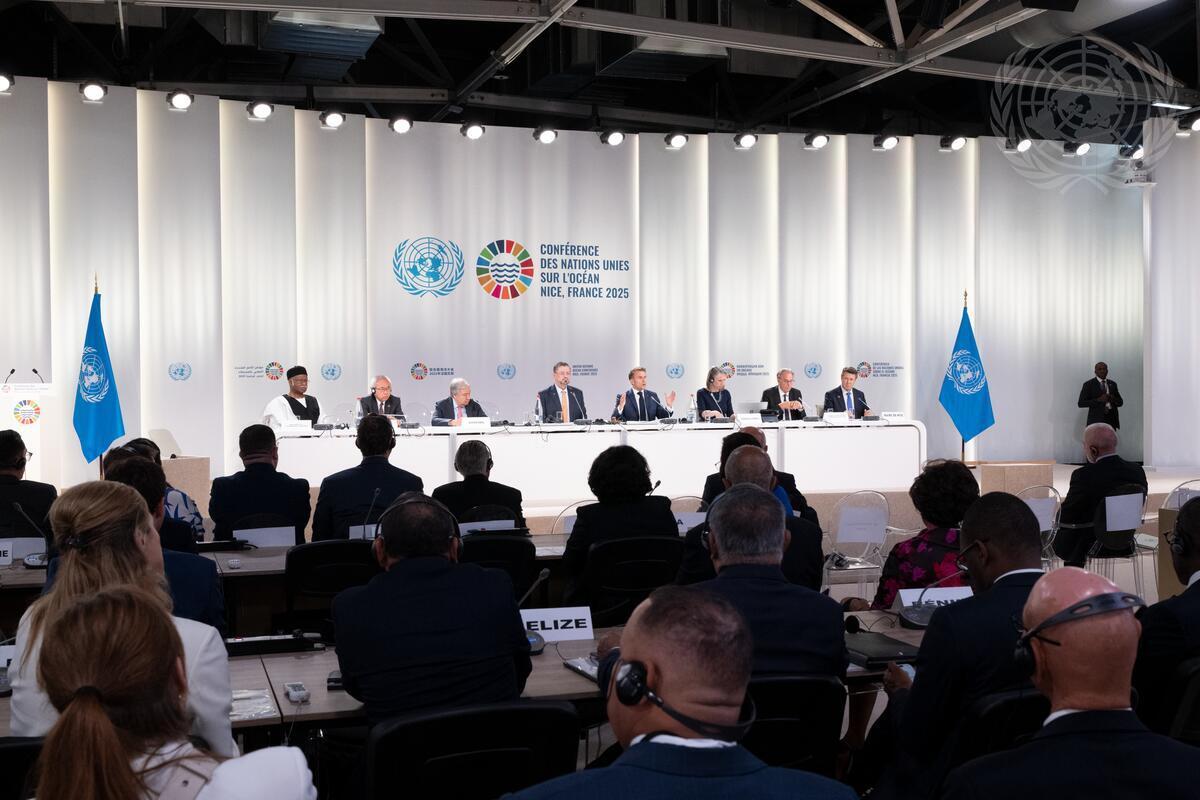
At the UN Ocean Conference (UNOC3), held in Nice, France in June 2025, a growing coalition of countries launched the first high-level global commitment to protect climate-resilient coral reefs. Championed by the Wildlife Conservation Society (WCS), the Government of Papua New Guinea, WWF, and The Nature Conservancy, the commitment was signed by 11 countries including Belize, France, Indonesia, Madagascar, Palau, Panama, Papua New Guinea, Solomon Islands, Tanzania, and Vanuatu; nations that together host 32% of the world’s coral reefs (Ocean+ Habitats, 2025).
The commitment calls on countries to:
- Integrate coral reef conservation into national biodiversity and climate strategies;
- Prioritize climate-resilient reefs within 30×30 efforts;
- Strengthen national coral reef action plans and monitoring systems;
- Reduce land-based pollution and unsustainable coastal development;
- Mobilize financing, capacity building, and technology transfer;
- Center solutions in equity, local knowledge, and Indigenous stewardship.
ALIGNING WITH ICRI’S POLICY ASKS
The commitment aligns closely with ICRI’s Key Policy Asks for Coral Reefs: Accelerating the Decade of Action, developed in collaboration with more than 20 experts. Released at the occasion of the 10th Our Ocean Conference, ahead of UNOC3, the document lays out eight strategic priorities to elevate coral reefs within climate, biodiversity, and sustainable development agendas.
The UNOC3 commitment brings political momentum and visibility to these recommendations, turning them into actionable pledges. Both the commitment and ICRI’s Policy Asks emphasize the need for integrated approaches, embedding reefs into national policies, reducing local threats, expanding marine protection, and ensuring equitable governance. Together, they offer a clear and coordinated roadmap for achieving Sustainable Development Goal (SDG) 14: Life Below Water.
FROM SCIENCE TO REAL-WORLD ACTION
Despite this momentum, implementation remains fragmented and underfunded. The Coral Reef Breakthrough proposes to secure 125,000 km² of shallow-water tropical reefs and invest at least USD $12 billion by 2030 to support the resilience of more than half a billion people. Yet ocean conservation funding still lags behind global needs (Barber et al., 2021). Even the most resilient reefs remain at risk without long-term investment and policy support.
That’s where new science comes in.
Led by WCS and Macquarie University, an upcoming 50 Reefs+ analysis will build on the original 50 Reefs study to deliver a high-resolution global map of climate-resilient reef locations, expected to be launched later in 2025. Spanning 8.7 million reef pixels and powered by MERMAID, this next-generation model integrates underwater observations with over 40 global datasets on climate exposure, reef composition, human pressures, and more.
This science offers governments, funders, and planners a decision-support tool to identify which reefs to prioritize for protection, restoration, and adaptive management. It turns “where should we act?” into a solvable question.
INCLUSIVE STRATEGIES FOR ALL CORAL REEFS
While prioritizing resilient reefs is critical, it’s equally important not to overlook reefs that are heavily impacted but still essential for coastal communities. Many degraded reefs provide food security, livelihoods, and cultural value, and are prime candidates for interventions such as coral restoration or reforms that ensure sustainable fisheries or tourism. For example, in Oracabessa Bay, Jamaica, local fishers and coral gardeners established community‑run coral nurseries and a no‑take fish sanctuary. By 2013, coral cover had increased by 153%, fish density by 272%, and fish biomass by 564% – while harmful algae declined by 43% (UNDP SGP, 2022).
An inclusive approach, one that addresses both resilient and vulnerable reefs, is essential to building durable, equitable, and climate-smart ocean protection systems that meet the needs of people and nature in the coming decade.
CORAL REEFS AND THE 30X30 OCEAN PROTECTION TARGET
More than 190 countries have now committed to the 30×30 target. Yet many protected areas are “paper parks” (designated on paper but ineffective in practice). While 42% of coral reef habitat now falls within some type of protected or conserved area (Ocean+ Habitats, 2025), most sites lack the enforcement, management capacity, or climate resilience needed to halt coral decline.
Achieving Target 3 of the GBF, and further, goal 2 of the Coral Reef Breakthrough, requires more than spatial coverage. It demands management that is adaptive, science-based, and rooted in community participation. Marine Protected Areas (MPAs), Other Effective Area-based Conservation Measures (OECMs), and locally managed areas must be inclusive of Indigenous rights, integrated into marine spatial planning, and tailored to future climate risks.
Coral reefs will not disappear entirely. The question is what kind of reefs will persist, where, and in what condition? Will they continue to function ecologically, support fisheries, and protect coastlines? Or will they become ghost ecosystems, bleached, degraded, and empty?
WHAT COMES NEXT?
As we move beyond the pledges made at UNOC3, attention must turn to implementation, delivering on national, regional, and international targets through policies, financing, and partnerships that strengthen both ecosystems and the communities who depend on them.
We must also raise ambition. More countries can join the high-level commitment to protect climate-resilient coral reefs, while others can align with the ICRI Policy Asks to bring coherence to global action. By the 31st meeting of the Conference of Parties under the UN Framework Convention on Climate Change (COP31) in 2026, our ambition is for 31 countries – covering more than 90% of the world’s coral reefs – to sign the commitment and implement meaningful actions to protect coral reefs. Encouragingly, several countries are already demonstrating leadership. Brazil has launched its National Strategy for the Conservation and Sustainable Use of Coral Reefs (ProCoral), a major milestone in its efforts to protect reef ecosystems. Indonesia has introduced the Coral Reef Bond, an innovative financing instrument for marine conservation. Fiji established the Fiji National Hub for Coral Reef Conservation (NHCRC), advancing coordination and implementation of reef protection efforts nationwide. Meanwhile, Niue has committed to sustainably managing 100% of its Exclusive Economic Zone through the Niue Ocean Wide (NOW) Trust and its ‘Ocean Conservation Commitment’ (OCC) sponsorship model – securing long-term support for a climate-resilient blue economy. These national efforts serve as important models and illustrate what is possible when political will and innovation are aligned.
Ultimately, success will depend on how effectively coral reef priorities are embedded in national biodiversity plans (NBSAPs), climate strategies (NDCs), and marine spatial planning. This ensures protections grow not just in size, but in impact, creating networks of well-managed, climate-resilient, and community-led conservation areas that safeguard biodiversity, food security, and coastal resilience.
Because the future of coral reefs is not just a question of nature, it’s a question of justice, survival, and global responsibility for the ocean and for the world.
Header image credit: Renata Romeo / Ocean Image Bank
References
- Barber, M., Michell, W., von Hirsh, T., and Vyas, T. (2021). A drop in the ocean: Closing the gap in ocean climate finance. Deloitte LLP.
- Costanza, R., de Groot, R., Sutton, P., van der Ploeg,S., Anderson, S.J., Kubiszewski, I., Fraber, S., and Turner, R.K. (2014) Changes in the global value of ecosystem services. Global Environment Change, 26(1): 152-158. DOI: http://dx.doi.org/10.1016/j.gloenvcha.2014.04.002
- Hawthorne L. Beyer, Emma V. Kennedy, Maria Beger, Chaolun Allen Chen, Joshua E. Cinner, Emily S. Darling, C. Mark Eakin, Ruth D. Gates, Scott F. Heron, Nancy Knowlton, David O. Obura, Stephen R. Palumbi, Hugh P. Possingham, Marji Puotinen, Rebecca K. Runting, William J. Skirving, Mark Spalding, Kerrie A. Wilson, Sally Wood, John E. Veron, Ove Hoegh-Guldberg (2018) Risk-sensitive planning for conserving coral reefs under rapid climate change. https://doi.org/10.1111/conl.12587
- International Coral Reef Initiative. (2024). Guidance Document on Integrating Coral Reefs and Associated Ecosystems into National Biodiversity Strategies and Action Plans. London, United Kingdom: International Coral Reef Initiative (ICRI) Secretariat.
- McClanahan, TR, Darling, ES, Beger, M, Fox, HE, Grantham, HS, Jupiter, SD, Logan, CA, Mcleod, E, McManus, LC, Oddenyo, RM, Surya, GS, Wenger, AS, Zinke, J, and JM Maina. 2023. Diversification of refugia types needed to secure the future of coral reefs subject to climate change. Conservation Biology 38: e14108. https://conbio.onlinelibrary.wiley.com/doi/full/10.1111/cobi.14108
- Ocean+ Habitats (2025). A global platform for spatial data on marine and coastal habitats. United Nations Environment Programme World Conservation Monitoring Centre (UNEP-WCMC). Retrieved [July 10, 2025], from https://habitats.oceanplus.org/
- Sing Wong, A., Vrontos, S., and Taylor, M. L. (2022). An assessment of people living by coral reefs over space and time. Global Change Biology, 28*(23), 7139–7153. https://doi.org/10.1111/gcb.16391
- Souter, D., Planes, S., Wicquart, J., Logan, M., Obura, D., and Staub, F. (eds), (2021). Status of coral reefs of the world: 2020 report. Global Coral Reef Monitoring Network (GCRMN) and International Coral Reef Initiative (ICRI). DOI: 10.59387/WOTJ9184
- UNDP Small Grants Programme. (2022, October 6). A bay in Jamaica comes back to life. Small Grants Programme. https://www.sgp.undp.org/resources-155/our-stories/629-a-bay-in-jamaica-comes-back-to-life.html
- Wicquart J., Towle E. K., Dallison T., Staub F., and Planes S. (eds.), (2025). Status and Trends of Coral Reefs of the Pacific: 1980-2023. Global Coral Reef Monitoring Network (GCRMN) and International Coral Reef Initiative (ICRI). doi.org/10.59387/WIUJ2936


About the authors
Margaux Monfared is the International Policy and Advocacy Director for the International Coral Reef Initiative, where she drives global efforts to promote sustainable coral reef conservation through strategic policy development and international collaboration. With several years of hands-on experience managing and organising marine conservation projects, Margaux has worked in diverse reef environments around the world, including Honduras, Cambodia, and the Maldives. Her work has centred on enhancing coral reef resilience to climate change through collaborative research, community outreach, and cross-disciplinary teamwork-yielding valuable insights into effective, science-based conservation practices. Margaux also recently joined Leading Women for the Ocean, a growing global network that empowers women’s voices in international ocean conservation. Through this and other platforms, she contributes to advancing more inclusive and effective ocean governance.
Dr. Emily DarlingDr. Emily Darling is an award-winning coral reef ecologist and has published over 75 peer-reviewed papers on coral reef resilience, multiple stressors, conservation, and climate change. As the Director of Coral Reef Conservation at the Wildlife Conservation Society, she coordinates coral reef strategy, science, and monitoring across WCS’s global portfolio in 15 countries. Dr. Darling leads global efforts to identify and protect climate-resilient coral reefs—those with the greatest potential to survive warming oceans and support long-term recovery. She helped launch the first-ever political commitment to protect climate-resilient coral reefs, now endorsed by 11 countries and counting. Passionate that science is improved by clean data, she co-founded MERMAID, a coral reef monitoring platform used in 51 countries by over 100 organizations, which powers global analyses of coral reef ecology, resilience, and conservation.