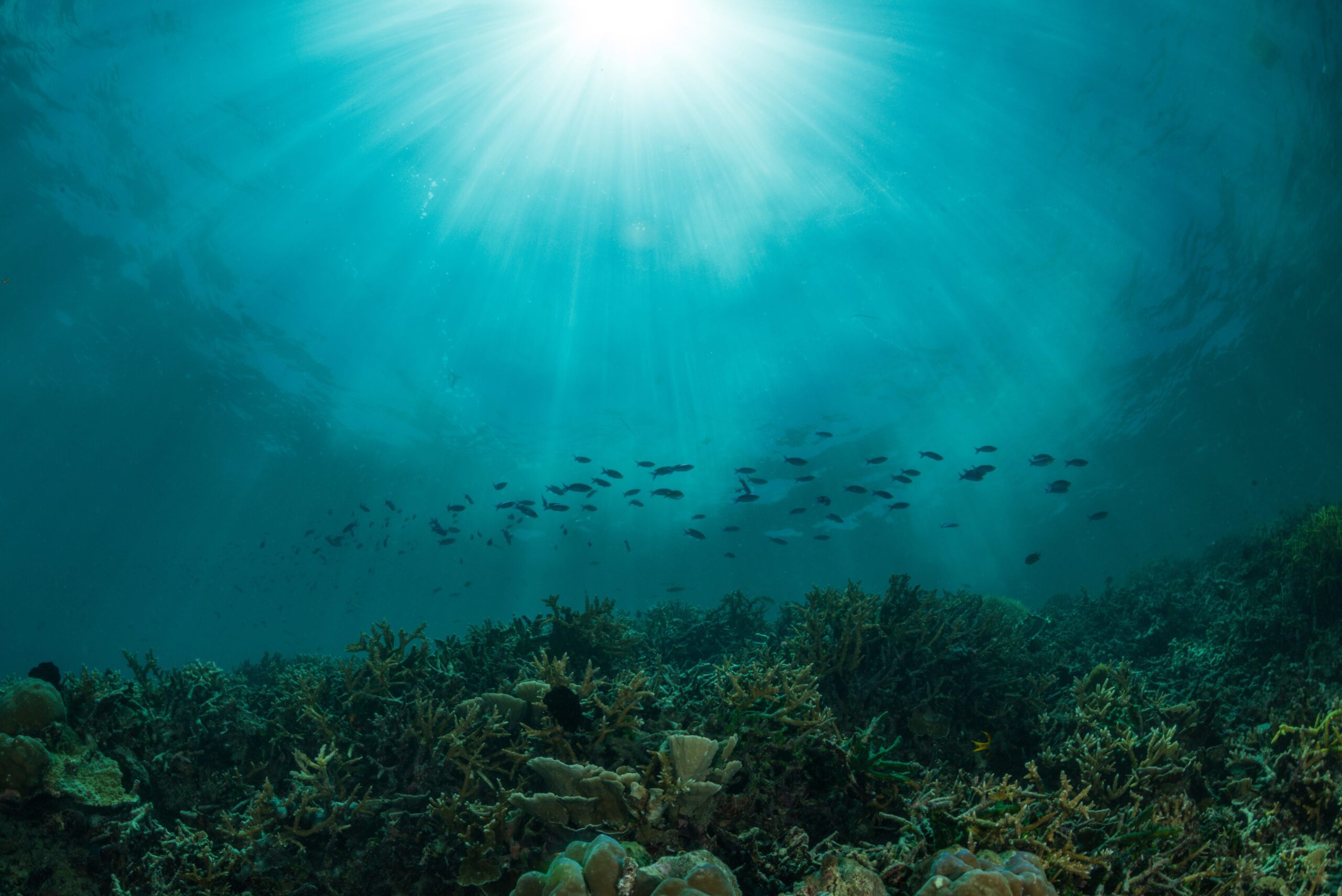
From Agreement to Action: Making the High Seas Treaty Work
The new High Seas Treaty, agreed in June 2023, creates a comprehensive framework for protecting and managing the ocean beyond national jurisdiction. This vast area, known as the “high seas”, constitutes nearly two-thirds of the global ocean and covers almost half the surface of the planet.
As a global commons far from human habitation, the high seas have suffered under a fragmented and weak governance patchwork that has led to depletion of fisheries, the destruction of unique and vulnerable habitats, and declines in populations of turtles, seabirds and other marine life.
WHAT IS THE HIGH SEAS TREATY?
The treaty provides, for the first time, an overarching framework for establishing fully and highly protected marine protected areas (MPAs), which scientists tell us offer the best hope for rebuilding the health and resilience of the ocean. High seas MPAs are essential if we are to reach the globally-agreed target of protecting at least 30% of the ocean by 2030 (30×30). And, importantly, the treaty provides pathways for strengthening assessment and management of human activity outside protected areas. Because the ocean is a fluid environment, what happens outside protected areas can determine the success or failure of MPAs in restoring ocean health.
Adoption of the treaty text in June of 2023 after almost two decades of talks represented a major victory not only for conservation, but for the notion that countries can come together and solve major global problems.
The treaty presents a once in a lifetime opportunity for conservation on a global scale, but right now it is only words on paper. Turning those words into conservation on the water requires at least 60 nations to ratify it. As of this writing, 52 countries have ratified the treaty. It is critically important that countries accelerate their ratification timetables, so that the treaty can enter into force and we can continue toward the end goal of universal ratification.
Once that happens, the real work will begin.
IMPLEMENTATION OF THE HIGH SEAS TREATY
To implement the treaty effectively, various committees and procedures must be established to enable decisions regarding protected areas, proposed human activities in the ocean beyond national jurisdiction, and to provide for capacity building and the sharing of benefits derived from marine genetic resources. Procedures like decision-making will heavily influence the success or failure of the new treaty. As a prominent US Congressman (Representative John Dingell) used to say, “If you let me write the procedure and I let you write the substance, I’ll beat you every time.”
THE CRUCIAL ROLE OF THE PREPARATORY COMMISSION FOR THE BBNJ AGREEMENT
A Preparatory Committee, or “PrepCom,” which is open to representatives of all member countries of the United Nations, meets for a second time at United Nations headquarters in New York for a two week session starting Monday 18 August 2025. During the session, nations, civil society organizations and international organizations will meet to discuss procedures and arrangements, such as whether non-government organizations such as NRDC and the High Seas Alliance can participate as observers in the deliberations that will take place in the various committees that will be established under the new treaty, such as the scientific committee, the implementation and compliance committee, and the finance committee. Decisions by those committees will directly determine how effectively the treaty will be implemented, and it is essential that deliberations be open to civil society observers.
Also of pressing concern is the creation of a data-sharing platform called the “Clearinghouse Mechanism,” or CLHM, which serves essential functions across the treaty’s different parts. Many of the data sharing requirements in the treaty begin to accrue when the treaty enters into force (likely in early 2026), and an initial mechanism needs to be developed quickly to enable Parties to the treaty to fulfill their obligations to share information on, for example, proposed new industrial activities in the ocean beyond national jurisdiction, or new scientific expeditions to collect marine genetic resources.
Other issues to be tackled by the PrepCom include financial rules, selection criteria for different committees, arrangements to enhance cooperation between various international organizations relevant to conservation and use of the high seas, and decision making procedures. All of these will play important roles in determining the success or failure of the treaty.
THE HIGH SEAS: THE KEY TO ACHIEVING 30X30 IN THE OCEAN
In addition to the work of the PrepCom, a group of countries under the leadership of Chile has agreed to work together to lay the groundwork for the first generation of high seas MPAs. Called the “First Movers,” this ambitious group, supported by scientists and non-governmental organizations, aims to have MPA proposals ready for consideration and adoption by the first meetings of the Conference of the Parties.
The ambition and determination of this small group of countries is a beacon of hope for the achievement of 30×30 in the ocean, and it is NRDC’s honor to serve as its secretariat.
The new high seas treaty is among the most important conservation agreements in decades. Widely ratified and effectively implemented through a robust institutional infrastructure that is open, transparent, equitable, efficient and fair, the new treaty can help us achieve the 30×30 goal and restore the health and resilience of the global ocean, on which all of us depend.

About the author
Lisa Speer directs the International Oceans Program at the Natural Resources Defense Council. She has been involved in the development of the high seas treaty for more than a decade.
Related content
 Investing in Climate-Resilient Reefs as a Strategy for Coral Survival and Achieving 30×30
 From Words to Waves: Can Promises from UNOC3 Turn into Lasting Change for our Blue Planet?
 Ocean protection: closing the gaps for finance, ambition and implementation
Share this article
using #ForTheOcean