Guardians of the Pacific: Community-led solutions for ocean protection
Growing up in Samoa, an island nation ringed by a vast blue horizon, I learned early in my life that the ocean is our life-giver and story-keeper; the heart of Samoan and other Pacific Island cultures. I came to understand, as I grew older, that the ocean, which provides us with sustenance, also has the power to cause our destruction. The climate crisis fuelled by greenhouse gas emissions is wiping out communities and ecosystems. The Pacific Ocean is no longer this peaceful friend to me as it once was, and the fate of my home—and many other Pacific Islands—has never felt more uncertain.
WHY WE NEED OCEAN PROTECTION
A healthy ocean sustains life far beyond the Pacific: it covers over 70% of our planet, produces more than half the oxygen on Earth, regulates our climate, and feeds billions of people—yet only about 8% is designated as protected by governments and decision-makers worldwide.
Island communities are being hit hardest by climate breakdown and its impacts, even though Pacific Small Island Developing States (SIDS) contribute to less than 1% of global greenhouse gas emissions. They’re bearing a crisis they didn’t create and, despite the ocean’s vastness, it’s already showing signs of strain. Temperatures are rising, melting ice is fueling sea-level rise and eroding coasts, and storms and exceptionally high ‘king’ tides are stronger and more frequent. At the same time, extra carbon dioxide in the atmosphere is acidifying the seas, damaging marine habitats that are crucial for food security and the health of the entire planet.
When I began my climate work in Samoa, I thought my friends and I were alone on this journey. I quickly discovered that my fellow Pacific brothers and sisters were also fighting for their island homes, leading the way to build resilience and develop innovative solutions that protect both people and nature. By the end of this article, I hope you’ll feel the weight of our climate reality tempered by the hope and determination of our ocean warriors fighting for protection.
COMMUNITY-LED ACTION IN THE PACIFIC
Recently I explored five Pacific islands to create The Forgotten Pacific documentary, meeting with local people to learn about the fight to adapt and their vibrant, changing lives.
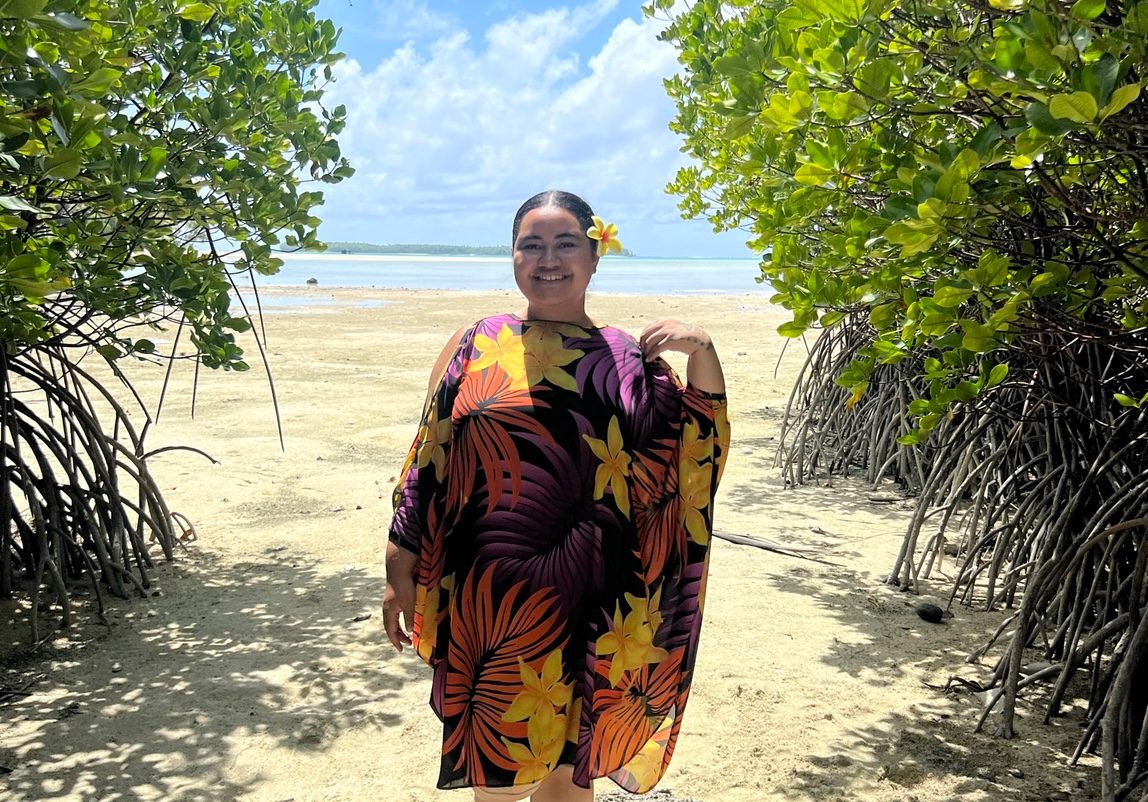
Tuvalu: the small atolls using mangroves as a natural defense
Tuvalu is a place of immense beauty—crystal-blue waters, vibrant greenery, and some of the warmest smiles you’ll ever encounter. Yet it’s also one of the world’s most vulnerable nations, often called the “Sinking Island,” as scientists predict it might be one of the first to be submerged by rising sea levels.
Tuvalu shoulders a crisis caused largely by fossil fuel industries half a world away—industries that may not even know how to pronounce “Tuvalu”. Coastal erosion is intensifying and taking ancestral lands, whilst king tides and cyclones become more severe, harming this atoll nation’s infrastructure and biodiversity. Fisheries are being affected, saltwater intrusion damages crops and vegetation, and droughts make freshwater scarce. What do you do when your island is being swallowed by water, yet you don’t have enough water to drink?
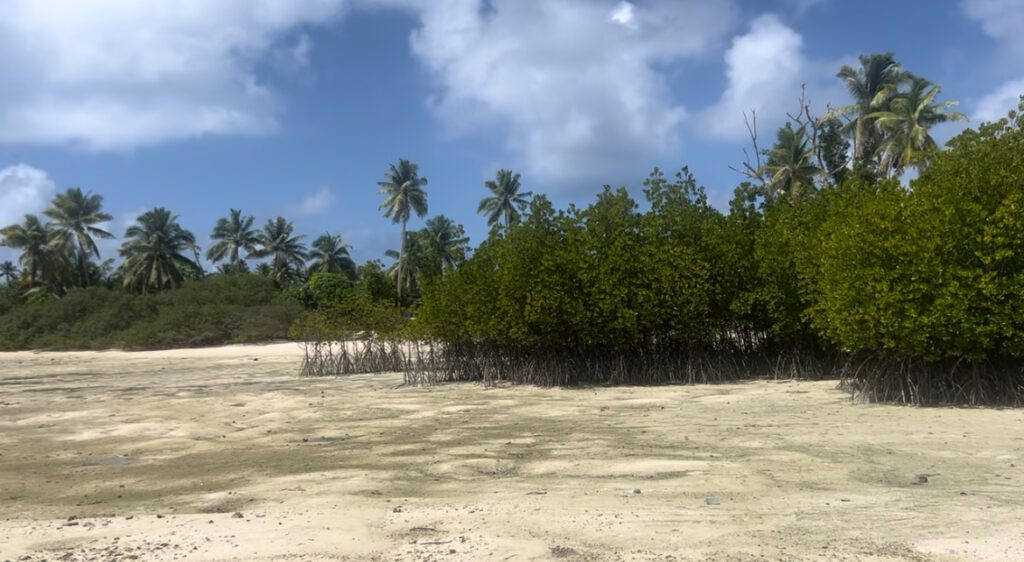
But Tuvaluans aren’t giving up. They are turning to mangroves as a natural defense against the rising tides. Local youth group Foulinga Fou leads a restoration project, planting rows of mangroves along their fragile shorelines. These tangled, resilient root systems help strengthen and bind soil to withstand large waves, safeguarding local communities. They also provide habitats for fish and crabs—an essential source of food and livelihood. Rather than rely on expensive and ecologically damaging seawalls, Tuvaluans are turning to Indigenous planting knowledge and restoring the very ecosystems that once sustained their ancestors.
Still, the questions of tomorrow hang in the air: If sea levels continue to rise, will Tuvaluans need to relocate? The Falepili Union Treaty offers a path for some to migrate to Australia—yet leaving behind thousands of years of culture and history feels unimaginable to many. In response, Tuvalu has launched the Future Now project to digitally recreate the nation, preserving its cultural legacy and statehood, although the emotional toll of losing their land remains heavy. For now, mangroves symbolize a hopeful stand and showcase the crucial role of allowing nature space and time to protect itself.
Leleuvia Island: planting climate-resilient coral
Across the Pacific in Fiji, the people of Leleuvia Island are taking another bold approach: planting heat-resistant corals that can survive in warmer waters. Coral reefs protect coastal villages from cyclones as a natural breaker and supply fish for local communities, but rising sea temperatures have led to mass coral bleaching. When corals become stressed by high temperatures, they expel the algae that supply both nutrients and vibrant color, turning once-bustling reefs into ghostly white skeletons.
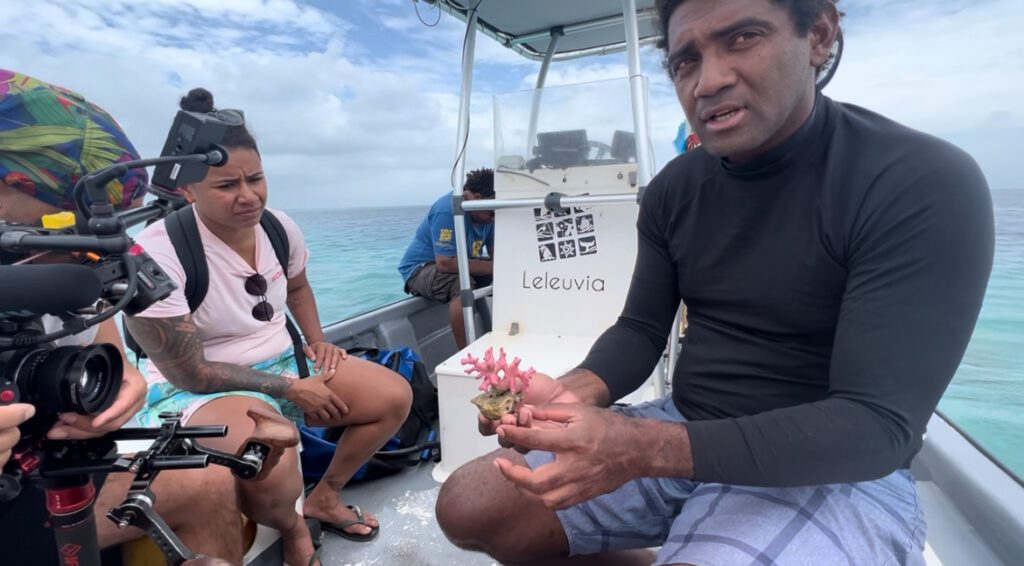
On Leleuvia, Seru Saumakidonu and his team have launched a coral nursery and restoration project designed to rehabilitate bleached coral. First, they collect damaged coral from compromised reefs and nurture it in a sheltered nursery close to shore. After monitoring the coral’s growth, they move it to a “Garden of Eden,” an area with cooler currents and higher nutrient levels. Once the corals have recovered, they are transplanted onto dead coral structures in the open sea, allowing them to grow and repopulate naturally.
A particularly exciting discovery is a coral variety known as the “Pink Lady”. This heat-resistant coral survived recent bleaching and has become the backbone of the reef restoration strategy in Leleuvia. By planting more of these resilient species, communities can buffer their reefs against future temperature spikes, sustaining the biodiversity and livelihoods tied to healthy coral ecosystems.
TURNING THE TIDE TOWARD 30X30 IN THE OCEAN
Though both Tuvalu and Leleuvia reflect local responses, each tells a global story. Over three billion people depend on the ocean for their livelihoods and healthy marine biodiversity underpins all life on Earth. The ocean is our greatest ally against climate change as it absorbs about a quarter of human-caused carbon dioxide emissions and 90% of excess heat.
A thriving, abundant ocean is within reach, but only if we act decisively. Scientists and ocean advocates alike call for protecting at least 30% of the ocean by 2030, a goal that has gathered momentum but still lags behind in actual implementation. As climate change accelerates, the gap between political promises and on-the-ground (and in-the-water) protection remains significant.
We must speed up efforts to designate, manage, and enforce marine protected areas (MPAs) that safeguard biodiversity and support the wellbeing of coastal communities. We need the urgent implementation of the new High Seas Treaty, which would extend safeguards to the vast stretches of international waters beyond any single nation’s jurisdiction.
Equally important is recognizing Indigenous stewardship. Pacific peoples, along with many other coastal Indigenous communities worldwide, have managed marine resources sustainably for generations. Their voices and leadership must be central to any successful conservation efforts. We are custodians of the world’s largest ocean and have a profound responsibility to protect it. For many in the Pacific, ocean protection and conservation determines whether our islands will have a future—or simply become historical footnotes.
WAVES OF ACTION AND HOPE
One question I’m often asked is, “why do you believe there’s a future for your island?” and my answer is simple: I have vision because my grandfather has memory. Our ancestors survived and thrived in harmony with the ocean. This vision of a healthy, vibrant Pacific is not just a dream—it’s a shared memory of a world that already existed and, in many places, still does.
We will not accept a future where our homelands disappear. We will not drown. We are taking matters into our own hands, but local Pacific communities can’t carry this burden alone.
We need a surge in global action. Governments must follow through on their pledges to protect at least 30% of the ocean by 2030 and invest in the science, resources, and enforcement required to make those protections meaningful and impactful. Indigenous and local voices must be at the center of decision-making, ensuring that ocean conservation goes hand in hand with their culture and rights. And we need every person—no matter where you live or how you engage with the water—to recognize that ocean health is inseparable from ours and our planet’s health.
We must stand together for the ocean, ensuring it remains resilient, abundant, and full of life for generations to come.

About the author
Brianna Fruean, a Samoan climate change activist and environmental advocate, has been dedicated to environmental causes from a young age. At 11, she became a founding member of the Samoan chapter of 350.org. The Secretariat of the Pacific Regional Environmental Programme (SPREP) selected her as their first-ever youth ambassador, and she served as the youth representative for Samoa during COP21 and the Paris Agreement negotiations. Fruean's continued climate activism was recognized in 2022 with a Global Citizen Prize, and she was also named a Champion for the Fossil Fuel Non-Proliferation Treaty. She continues to elevate young Pacific voices in the climate space as the youth representative on the Council of Elders for the Pacific Climate Warriors.
Related content
 Investing in Climate-Resilient Reefs as a Strategy for Coral Survival and Achieving 30×30
 From Words to Waves: Can Promises from UNOC3 Turn into Lasting Change for our Blue Planet?
 Ocean protection: closing the gaps for finance, ambition and implementation
Share this article
using #ForTheOcean